
Navigating Sensitive Skin During Perimenopause and Menopause: The Science Behind the Shift—and How to Care for Your Skin Now
If your skin has become noticeably more reactive in recent years—products that once felt perfectly comfortable now sting, environmental factors that never registered suddenly cause redness, and your complexion seems to oscillate between dry, irritated, and inexplicably breakout-prone—you’re witnessing one of the most common yet least discussed perimenopause skin changes.
Perimenopause skin sensitivity isn’t a matter of suddenly developing “sensitive skin.” It’s the result of specific, measurable hormonal shifts that alter your skin’s structure, barrier function, and inflammatory response at the cellular level. Understanding the science behind these menopausal skin changes doesn’t just help you make sense of what’s happening—it empowers you to respond with precision rather than guesswork.
Here’s what’s driving the transformation, how it manifests, and—most importantly—what you can actually do about it.
The Hormonal Architecture of Skin Sensitivity
Your skin’s behavior during perimenopause and menopause is governed by a cascade of hormonal changes, each with distinct and compounding effects on skin function. Understanding these drivers is the first step toward building skincare for menopause that actually works.
Estrogen and Progesterone Decline: The Foundation of Change
As estrogen and progesterone levels fluctuate and ultimately decline during perimenopause, the skin loses several of its foundational capacities simultaneously:
• Moisture retention diminishes. Estrogen stimulates the production of hyaluronic acid and ceramides—the molecules responsible for keeping your skin hydrated and your barrier intact. As levels drop, the skin’s ability to hold water declines measurably. The result is the persistent dryness, rough texture, and flaking that characterize dry menopause skin—and that moisturizer alone often can’t resolve
• Skin thins. Estrogen directly influences skin thickness by supporting dermal density. Declining levels mean thinner, more fragile skin that’s more vulnerable to irritation, injury, and perimenopause skin sensitivity
• Wound healing slows. Reduced estrogen hampers the skin’s repair mechanisms, meaning that cuts, irritation, and post-inflammatory marks take longer to resolve
• Itching and irritation intensify. The compromised lipid barrier and reduced moisture leave skin vulnerable to the kind of persistent, unexplained itching and perimenopause skin itching that so many women describe—often without any visible rash or obvious trigger
• Breakouts can emerge. Hormonal fluctuations—particularly the relative androgen excess created by declining estrogen—can trigger perimenopause skin breakouts, typically concentrated along the chin and jawline
Collagen Loss: The Structural Reckoning
Collagen—the protein responsible for your skin’s firmness, structure, and resilience—declines sharply as estrogen recedes. According to the American Academy of Dermatology, collagen production can decrease by up to 30% during the first five years of menopause, with a continued loss of approximately 1–2% annually thereafter.
The visible consequences are well-known: sagging, fine lines, loss of volume. But what’s less commonly discussed is how collagen loss compounds sensitivity. Thinner, less structurally supported skin is inherently more reactive—less able to buffer environmental stressors, less resilient in the face of irritation, and slower to recover when compromised.
pH Disruption: The Invisible Barrier Breakdown
Fluctuating hormones during perimenopause can shift your skin’s natural pH toward a more alkaline state. This may sound like a minor technical detail, but the implications are significant:
• Your skin’s acid mantle—the slightly acidic film that protects against bacteria, pollution, and moisture loss—weakens
• Environmental sensitivity increases, meaning factors that never bothered you before (wind, temperature changes, certain fabrics) can now trigger redness, irritation, or perimenopause skin rash
• Barrier function is further compromised, creating a cycle where sensitivity begets more sensitivity
Taken together, these three shifts—moisture loss, collagen decline, and pH disruption—explain why perimenopause and skin problems seem to arrive simultaneously and reinforce one another. Your skin isn’t overreacting. It’s responding logically to a profound biological recalibration.
How to Care for Sensitive Menopausal Skin: A Skin Care Routine for Mature Skin
The changes are real and measurable—but they’re also manageable. The key is moving away from generic skincare and toward a routine specifically calibrated for perimenopause skincare: one that prioritizes barrier repair, delivers hydration at multiple levels, supports collagen, and treats your skin’s new sensitivity as a feature to work with rather than a problem to overpower.
1. Hydrate and Repair the Barrier
This is the single most important step for managing menopausal skin changes. When the barrier is compromised, everything else—serums, actives, treatments—either can’t penetrate effectively or causes irritation.
• Look for moisturizers and serums containing hyaluronic acid, ceramides, glycerin, and squalane—ingredients that both draw moisture in and help the skin hold onto it
• Layer your hydration: a hydrating toner or serum first, followed by an emollient moisturizer, sealed with a facial oil for occlusive protection
• Incorporate overnight treatments for deeper repair. The Innovator—Modern Age Skin’s Luminous Repair Oil—provides the kind of deep, barrier-reinforcing nourishment that perimenopause and dry skin demand, locking in hydration layers and restoring radiance while you sleep
2. Support Collagen Production
With collagen declining at an accelerated pace, incorporating collagen skin care products and collagen-stimulating actives into your routine is essential—not optional.
• Peptides, stable forms of vitamin C, and niacinamide all support collagen synthesis and can be incorporated into a sensitive-skin-friendly routine
• Nighttime is your strongest ally. Your skin’s repair cycle is most active while you sleep, making it the ideal window for targeted actives. The Catalyst—our Nightly Renewal Complex—delivers bioactive botanicals and peptides designed to work with your skin’s natural repair mechanisms, supporting cell turnover and collagen without harsh or sensitizing ingredients
• For more intensive intervention, consult with a dermatologist about non-invasive professional treatments like microneedling or laser therapy that can stimulate deeper collagen remodeling
3. Protect Against UV Damage Daily
Sun protection isn’t optional at any age, but it becomes even more critical during menopause, when skin is thinner, more reactive, and more susceptible to hyperpigmentation.
• Apply a broad-spectrum sunscreen with SPF 30 or higher every morning, regardless of weather or indoor/outdoor plans
• Look for mineral-based formulations with zinc oxide or titanium dioxide, which tend to be better tolerated by perimenopause skin sensitivity than chemical filters
• Choose sunscreens with added antioxidants—vitamin E, ferulic acid, niacinamide—to combat free radical damage alongside UV protection
4. Cleanse with Intention, Not Aggression
Many women over 40 are unknowingly using cleansers that contribute to the very sensitivity they’re trying to manage. Foaming, sulfate-based formulations strip the natural oils your skin desperately needs to maintain its barrier.
• Switch to mild, sulfate-free cleansers that remove impurities without disrupting your skin’s lipid layer
• Opt for pH-balanced formulations—ideally in the 4.5–5.5 range—to support rather than undermine your skin’s acid mantle
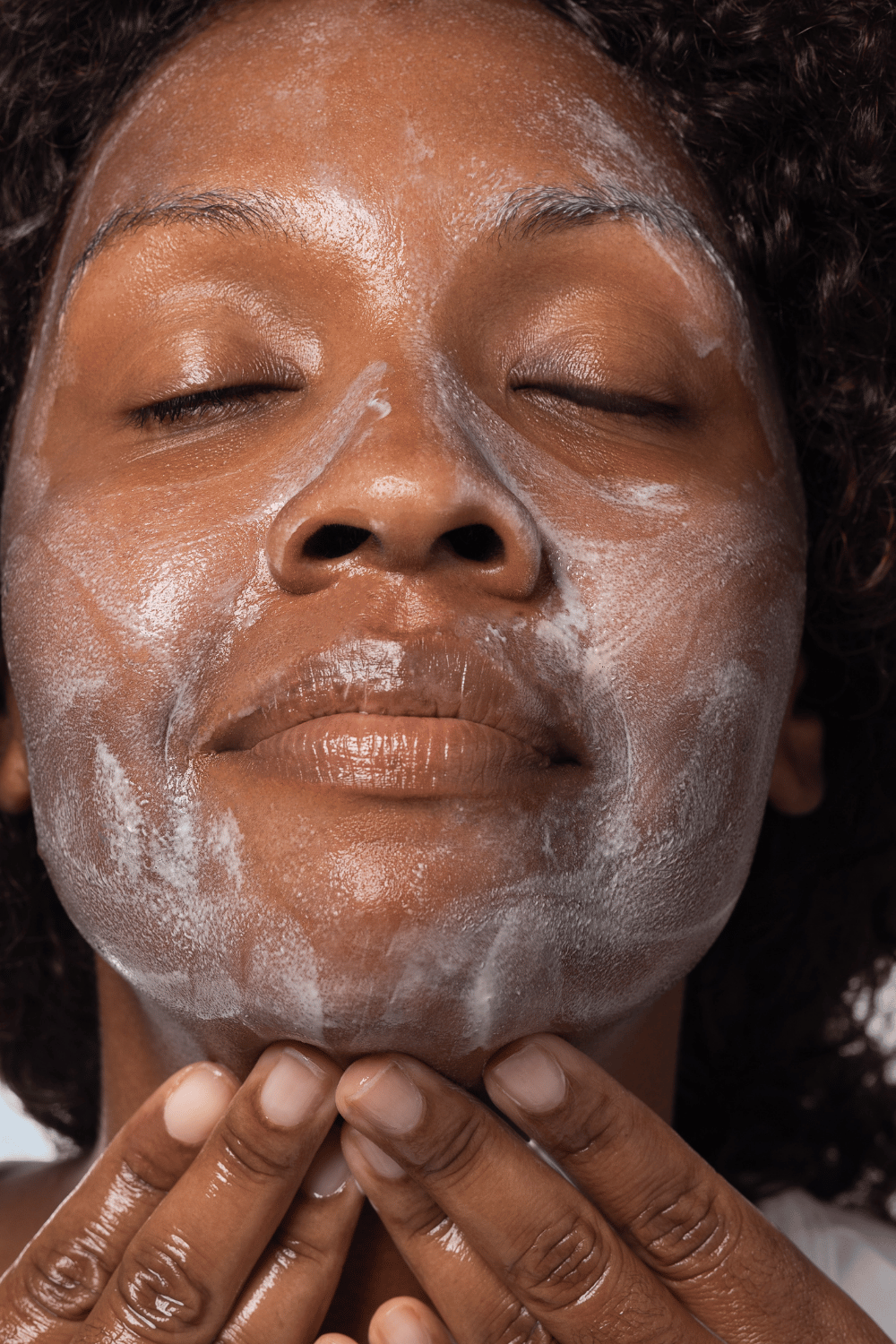
• The Reset—Modern Age Skin’s Restorative Cleansing Balm—was formulated to dissolve makeup, sunscreen, and environmental residue while actively nourishing the skin. It’s cleansing reimagined as an act of care, not extraction
5. Calm Irritation, Rashes, and Breakouts
Perimenopause skin sensitivity means your skin is more reactive to ingredients that once caused no concern. Managing irritation and hormonal skin changes requires a lighter, more intentional touch:
• Use calming, anti-inflammatory ingredients: centella asiatica, bisabolol, green tea extract, and colloidal oatmeal can soothe without further disrupting the barrier
• Eliminate known irritants from your routine: alcohol-based toners, synthetic fragrances, essential oil blends, and harsh physical exfoliants have no place in perimenopause skincare
• For hormonal breakouts, resist the urge to use aggressive acne treatments designed for teenage skin. Your barrier is already compromised—stripping it further will worsen both acne and dryness simultaneously
6. Nourish from Within
Topical care addresses the surface. But menopausal skin changes are driven systemically, and supporting your skin from the inside is equally important.
• Stay well hydrated. Adequate water intake supports every aspect of skin function, though it’s a foundation, not a standalone solution
• Prioritize an anti-inflammatory diet rich in omega-3 fatty acids (fatty fish, walnuts, flaxseed), antioxidants (berries, leafy greens), and vitamins A, C, and E
• Consider supplements for menopause dry skin containing omega-3s, evening primrose oil, and hyaluronic acid to support hydration and barrier function from within
• If your symptoms are significantly affecting your quality of life, speak with a healthcare provider—ideally one with menopause expertise—about hormone replacement therapy (HRT), which can address the hormonal root cause of many perimenopause and skin problems
7. Establish a Relationship with Your Dermatologist
Regular dermatological check-ups become increasingly valuable during perimenopause and menopause. Your skin is changing in ways that may require professional monitoring—not just for cosmetic concerns but for health. A dermatologist familiar with hormonal skin changes can provide personalized treatment recommendations, monitor for conditions that become more common with age, and help you adjust your routine as your skin continues to evolve.
Embracing Your Skin’s Transition: Aging Gracefully with Informed Care
Perimenopause and menopause are natural transitions—not problems to be solved, but phases to be navigated with intelligence and care. The skin changes that accompany them are real, sometimes uncomfortable, and often frustrating. But they are also understandable, manageable, and—with the right approach—an invitation to deepen your relationship with your skin rather than fight against it.
The best skincare for menopause isn’t about finding one miracle product. It’s about building a thoughtful, layered routine that respects your skin’s new reality: its need for deeper hydration, gentler handling, stronger barrier support, and active collagen protection. When you give your skin what it actually needs—rather than what worked a decade ago—the results speak for themselves.
Your skin is a reflection of your overall well-being, and it deserves the same informed, compassionate attention you bring to every other aspect of navigating this life stage. That’s the philosophy behind everything we formulate at Modern Age Skin—because the most beautiful skin is skin that’s truly understood.
Your skin has changed. Your care should change with it. Explore Modern Age Skin at modernageskin.com

Written by Joy Kirst
Joy Brown Kirst is the founder and formulator of Modern Age Skin, an award-winning clean beauty brand specializing in perimenopause and menopausal skincare. With an MBA from Rice University and over 20 years of experience in corporate leadership and entrepreneurship, Joy brings strategic business expertise to the beauty industry.
Following her successful career in the executive search industry, Joy earned her Diploma in Organic Skincare Formulation from Formula Botanica (2021), combining her business acumen with botanical expertise to create bioadaptive, results-driven formulas for hormonal skin changes.
Modern Age Skin’s hero product, The Innovator - Luminous Repair Oil, has won both the Shape Skin Award for Best Facial Oil (2024) and the Healing Lifestyles Earth Day Beauty Award (2025). The brand is Power Beauty Collab certified and Leaping Bunny Certified, reflecting Joy’s commitment to clean, cruelty-free beauty.
Joy and Modern Age Skin have been featured in Forbes, BeautyMatter, Well Defined, on television with Pix 11 in NYC, and on the Well Done, Thrive After 45, and Midlife Mavericks podcasts. Through her work, Joy is redefining skincare for women navigating hormonal transitions, proving that aging skin deserves sophisticated, science-backed solutions.

Leave a comment
This site is protected by hCaptcha and the hCaptcha Privacy Policy and Terms of Service apply.