
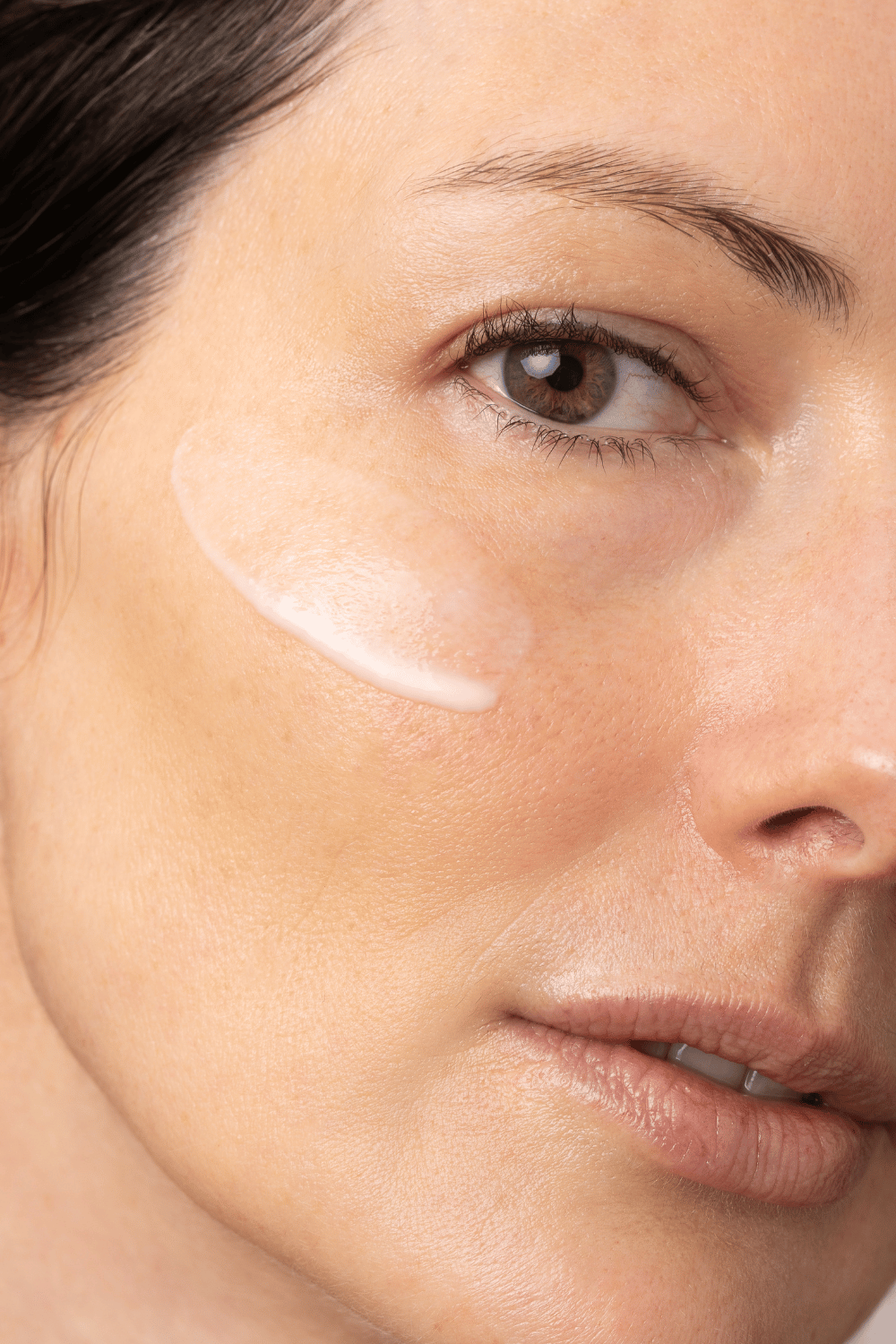
Best Serum for Menopausal Skin: What to Look For and Why It Matters
Your skin isn't the same as it was ten years ago, and your serum shouldn't be either. Here's how to choose a formula that actually works for perimenopause and menopause.
You've probably heard it a hundred times: serum is the workhorse of any skincare routine. But here's what those well-intentioned recommendations rarely acknowledge—the serum that transformed your skin in your thirties may be doing almost nothing for you now. Worse, it might be actively working against what your skin needs.
If you're navigating perimenopause or menopause, your skin is undergoing fundamental changes at the cellular level. Estrogen decline doesn't just affect how your skin looks; it alters how your skin functions. The moisture retention mechanisms that once worked seamlessly now struggle. The collagen production that kept your skin firm is declining measurably, and research suggests women lose up to 30% of their dermal collagen in the first five years following menopause. The protective lipid barrier that once shielded your skin from environmental assault is thinner, more permeable, and more easily disrupted.
This isn't about aging gracefully or fighting time. It's about understanding that your skin's requirements have genuinely shifted, and that finding the right menopause serum means looking for formulations designed to meet those specific requirements, not repurposed formulas from a different life stage.
What Happens to Your Skin During Menopause: The Science
Before we can discuss what makes a serum effective for menopausal skin, we need to understand what's actually changing beneath the surface and the science behind estrogen and collagen.
The Estrogen-Skin Connection
Estrogen isn't just a reproductive hormone, it's a major regulator of skin health. Estrogen receptors exist throughout your skin, influencing everything from collagen synthesis to sebum production to wound healing. When estrogen levels decline during perimenopause and menopause, the effects cascade through multiple skin systems simultaneously.
- Collagen decline accelerates. Estrogen directly stimulates fibroblasts, which are the cells responsible for producing collagen and elastin. As estrogen drops, so does collagen synthesis. Studies document a roughly 2.1% decrease in skin collagen per year after menopause, with the most dramatic losses occurring in the first several years of the transition.
- Sebum production decreases. While some women experience temporary oiliness during perimenopause (due to relative androgen excess), the longer-term trajectory is toward reduced sebum production. This natural oil is part of your skin's protective barrier, and its decline contributes to the persistent dryness many menopausal women experience.
- The skin barrier weakens. Your skin's lipid barrier, the outermost layer that locks in moisture and keeps irritants out, becomes thinner and more fragile. Transepidermal water loss increases, meaning your skin loses hydration faster than it can retain it.
- Cellular turnover slows. The rate at which your skin sheds dead cells and generates new ones declines with age and hormonal change. This can lead to dullness, uneven texture, and a complexion that no longer reflects light the way it once did.
Understanding these mechanisms isn't academic. It directly informs what you should look for, and what you should avoid in a serum for menopausal skin.
What to Look For in a Menopause Face Serum
An effective serum for perimenopause and menopausal skin should address multiple concerns simultaneously: barrier repair, hydration, collagen support, and cellular vitality. Here are the categories of ingredients to prioritize.
Peptides: The Collagen Conversation
Peptides are short chains of amino acids that serve as signaling molecules in your skin. Certain peptides can communicate with fibroblasts, essentially encouraging them to produce more collagen and elastin despite declining estrogen levels.
Look for serums containing bioactive peptides that support structural protein synthesis. While peptides won't replace lost collagen overnight, consistent use can help slow the rate of decline and support your skin's natural repair processes.
Hyaluronic Acid: Deep, Sustained Hydration
Hyaluronic acid occurs naturally in your skin, where it binds water molecules and maintains suppleness. During menopause, your skin's natural hyaluronic acid levels drop, contributing to that persistent sense of dehydration even when you're drinking plenty of water.
Topical hyaluronic acid in various molecular weights can help address this deficit. Lower-weight molecules penetrate more deeply; higher-weight molecules create a hydrating film on the skin's surface. A well-formulated serum may include multiple weights for comprehensive hydration.
Barrier-Supporting Lipids and Botanicals
Given that the lipid barrier is compromised during menopause, ingredients that reinforce and protect this barrier are essential. Look for serums containing ceramides, fatty acids, or plant oils rich in these components.
At Modern Age Skin, we formulate with bioactive botanical oils specifically chosen for their compatibility with mature skin's lipid profile. The Innovator, our Luminous Repair Oil, contains camellia seed oil, sunflower seed oil, and squalane, lightweight oils that absorb readily, reinforce the barrier, and don't contribute to congestion.
Antioxidants: Protection and Repair
Menopausal skin is more vulnerable to oxidative stress damage from free radicals generated by UV exposure, pollution, and other environmental factors. Antioxidants neutralize these free radicals before they can accelerate collagen breakdown or trigger inflammation.
Effective antioxidant ingredients include vitamin C derivatives, vitamin E, niacinamide, and a range of botanical extracts. A serum containing a blend of antioxidants provides broader protection than a single-ingredient approach.
What to Avoid in Menopausal Skincare
Just as important as what you put on your skin is what you keep off it. Certain ingredients that work well for younger, more resilient skin can be counterproductive or outright damaging for skin navigating hormonal changes.
- Harsh exfoliants and high-strength acids. Chemical exfoliants like glycolic acid and salicylic acid have their place, but menopausal skin's compromised barrier makes it less tolerant of aggressive exfoliation.
- Alcohol-based formulas. Denatured alcohol strips oils from the skin, precisely what menopausal skin cannot afford to lose.
- Synthetic fragrances. Menopausal skin is more reactive than younger skin, and synthetic fragrances are among the most common triggers for irritation.
How to Layer Serums in Your Menopause Skincare Routine
Morning Routine
- Cleanse gently. Use a non-stripping cleanser that removes overnight residue without disrupting your barrier. The Reset, our Restorative Cleansing Balm, dissolves impurities while leaving protective lipids intact.
- Apply your serum. While skin is still slightly damp, apply a few drops of your treatment serum and press gently into skin.
- Moisturize if needed. Depending on your skin's needs and the season, you may layer a lightweight moisturizer over your serum.
- Always finish with SPF. Menopausal skin is more vulnerable to UV damage.
Evening Routine
- Double cleanse if wearing SPF or makeup.
- Apply your nighttime serum. The Catalyst, our Nightly Renewal Complex, delivers bioactive peptides and botanical extracts designed to work with your skin's natural overnight repair cycle.
- Seal with a facial oil. The Innovator provides this protective layer while delivering its own roster of skin-supporting botanicals.
The Catalyst: A Serum Formulated for Menopausal Skin
When we developed The Catalyst, we designed it specifically for skin experiencing hormonal transition. This isn't a serum repurposed from a general skincare line or reformulated with a marketing angle. Every ingredient was selected for its relevance to perimenopause and menopausal skin.
The formula includes bioactive peptides to support collagen and elastin synthesis, hyaluronic acid for multi-level hydration, niacinamide to strengthen the barrier and calm inflammation, and a complex of botanical antioxidants to protect against environmental stress.
What it doesn't include: synthetic fragrances, harsh alcohols, petroleum derivatives, or any of the categories of ingredients we avoid in all Modern Age Skin formulations.
Frequently Asked Questions About Menopause Serums
At what age should I start using a menopause-specific serum?
There's no magic number. Perimenopause can begin in the early forties for some women, mid-fifties for others. If you're noticing changes in your skin that seem tied to hormonal shifts, persistent dryness despite good hydration, sudden sensitivity to products that once worked fine, loss of firmness or radiance, it may be time to reassess your routine, regardless of your exact age.
Can I use retinol with a menopause serum?
Retinol can be beneficial for collagen support and cellular turnover, but menopausal skin often tolerates it poorly, especially at higher strengths. If you want to incorporate retinol, start with a low concentration, use it sparingly, and pair it with robust barrier support.
How long before I see results?
Skin cell turnover slows with age, so patience is essential. Most women begin to notice improved hydration and comfort within the first few weeks. Deeper changes, improvements in firmness, texture, and overall radiance, typically become apparent over two to three months of consistent use.
What's the difference between a serum and a facial oil?
Serums are typically water-based or lightweight, designed to deliver concentrated active ingredients that penetrate into the skin. Facial oils are lipid-based, designed to nourish, protect, and seal in moisture. They serve complementary functions. For menopausal skin, using both serum first and oil after, often produces the best results.
Your Skin Deserves More
At Modern Age Skin, we don't believe in asking you to choose between addressing your skin's concerns and embracing your age. You can do both. You should do both.
A serum formulated for menopausal skin isn't about erasing evidence of your years, it's about providing your skin with what it genuinely needs right now, in this chapter of your life. That's a fundamentally different philosophy than "anti-aging," and it produces fundamentally different results: skin that's healthy, comfortable, and radiant not despite your age, but in harmony with it.
We're not post-anything. We're just getting started.
Explore The Catalyst, our Nightly Renewal Complex, and The Innovator, our Luminous Repair Oil—both formulated specifically for perimenopause and menopausal skin.

Written by Joy Kirst
Joy Brown Kirst is the founder and formulator of Modern Age Skin, an award-winning clean beauty brand specializing in perimenopause and menopausal skincare. With an MBA from Rice University and over 20 years of experience in corporate leadership and entrepreneurship, Joy brings strategic business expertise to the beauty industry.
Following her successful career in the executive search industry, Joy earned her Diploma in Organic Skincare Formulation from Formula Botanica (2021), combining her business acumen with botanical expertise to create bioadaptive, results-driven formulas for hormonal skin changes.
Modern Age Skin’s hero product, The Innovator - Luminous Repair Oil, has won both the Shape Skin Award for Best Facial Oil (2024) and the Healing Lifestyles Earth Day Beauty Award (2025). The brand is Power Beauty Collab certified and Leaping Bunny Certified, reflecting Joy’s commitment to clean, cruelty-free beauty.
Joy and Modern Age Skin have been featured in Forbes, BeautyMatter, Well Defined, on television with Pix 11 in NYC, and on the Well Done, Thrive After 45, and Midlife Mavericks podcasts. Through her work, Joy is redefining skincare for women navigating hormonal transitions, proving that aging skin deserves sophisticated, science-backed solutions.


Leave a comment
This site is protected by hCaptcha and the hCaptcha Privacy Policy and Terms of Service apply.