
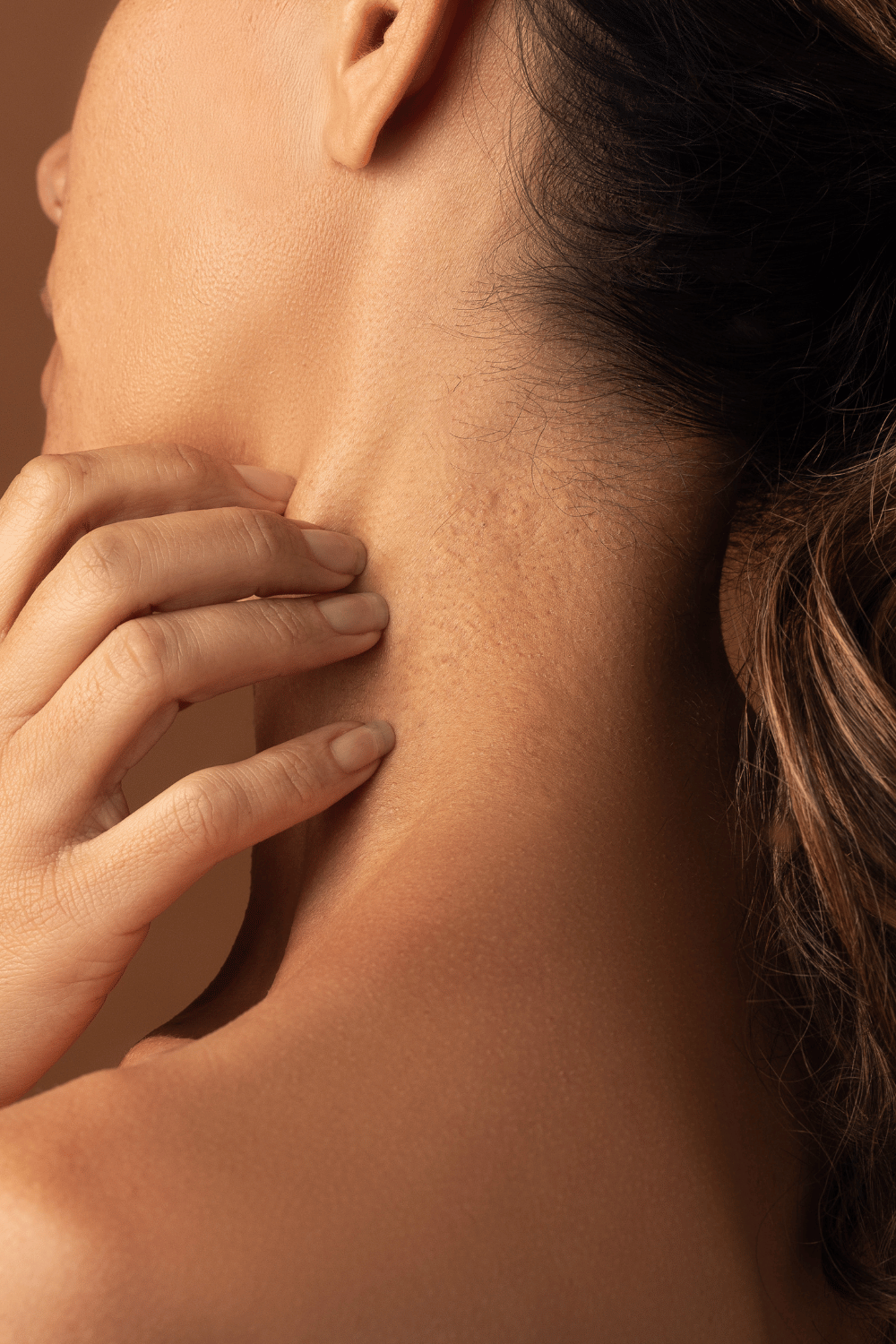
When Your Skin Turns Against You: Inflammatory Conditions, Menopause, and How to Find Relief
You followed the same skincare routine for years. Then, almost overnight, your skin changed. Suddenly you're dealing with redness that won't quit, patches of rough, itchy skin you don't recognize, or flare-ups of conditions you thought you'd outgrown. If this sounds familiar, you're not imagining it — and you are far from alone.
Perimenopause skin changes can be dramatic and deeply unsettling, especially when they show up as inflammatory skin conditions like eczema, rosacea, and psoriasis. The connection between menopause and skin inflammation is real, scientifically documented, and, importantly, something you can address. Here's what's happening beneath the surface — and what to do about it.
The Estrogen-Inflammation Connection: Why Menopause Changes Everything
Estrogen is one of the most powerful anti-inflammatory agents your body produces. It regulates immune responses, supports the skin barrier, maintains collagen production, and keeps the skin's moisture levels balanced. During perimenopause, as estrogen levels fluctuate and then decline, this protective effect diminishes — and the skin pays the price.
Research shows that estrogen directly modulates inflammatory pathways in the skin. Estrogen receptors are found throughout the epidermis and dermis, meaning that when estrogen drops, those receptor sites go quiet, and the skin's inflammatory response becomes harder to regulate. The result? Skin that was previously calm can become reactive, sensitive, and prone to flare-ups.
Hormones and skin changes are inseparable. Estrogen also plays a critical role in maintaining the skin microbiome — the community of beneficial bacteria that live on the skin's surface and help defend against pathogens and environmental triggers. When estrogen falls, microbiome diversity can decrease, leaving skin more vulnerable to the very triggers that set off inflammatory cascades.
|
The Science at a Glance Estrogen suppresses pro-inflammatory cytokines (chemical messengers that promote inflammation) including IL-1, IL-6, and TNF-alpha. When estrogen declines in perimenopause, these cytokines can become more active, contributing to redness, itching, swelling, and skin barrier disruption. |
Perimenopause Skin Conditions: Eczema, Rosacea, and Psoriasis Explained
While these three conditions are distinct, they share a common thread: all involve immune system dysregulation and inflammation, and all can be triggered or significantly worsened by the hormonal shifts of perimenopause. Understanding what you're dealing with is the first step toward managing it effectively.
Eczema (Atopic Dermatitis)
Eczema is characterized by dry, intensely itchy skin that can become cracked, scaly, and inflamed. For many women, eczema symptoms that were minor or well-controlled suddenly worsen during perimenopause — and women who never had eczema before can develop it for the first time.
Itchy skin and perimenopause are closely linked. Declining estrogen reduces the skin's ability to produce ceramides — the lipids that form the "mortar" between skin cells and hold moisture in. Without adequate ceramides, the skin barrier becomes leaky, allowing irritants and allergens to penetrate and trigger immune responses. The hallmark sign: dry skin perimenopause sufferers know all too well — tight, itchy skin that feels perpetually dehydrated no matter how much moisturizer is applied.
- Common locations: Appears as red, scaly, or crusty patches
- Often found on the face, neck, elbows, and behind the knees
- Can cause significant sleep disruption due to nighttime itching
- Triggers include stress, heat, sweat, fragrances, and harsh cleansers
Rosacea
Rosacea is a chronic inflammatory skin condition that causes persistent redness, visible blood vessels, and sometimes bumps or pustules — primarily on the cheeks, nose, chin, and forehead. It affects an estimated 16 million Americans, with the majority being women in midlife.
Rosacea perimenopause cases are particularly common and often more severe. Hot flashes — one of the hallmark symptoms of menopause — are a powerful rosacea trigger: the sudden surge of heat causes blood vessels to dilate rapidly, which can precipitate or worsen flushing and redness. Women who had mild rosacea in their 30s may find it becomes a significant perimenopause skin problem in their 40s and 50s.
- Persistent facial redness or flushing that comes and goes
- Small, visible blood vessels (telangiectasia) on the nose and cheeks
- Possible burning or stinging sensation
- Sensitive skin that reacts to temperature changes, spicy foods, alcohol, and UV exposure
Psoriasis
Psoriasis is an autoimmune condition in which skin cells multiply too rapidly, creating raised, silvery-scaled plaques. It can appear anywhere on the body but is most common on the scalp, elbows, knees, and lower back. Like eczema and rosacea, psoriasis is driven by immune system activity — and immune regulation is directly influenced by estrogen.
Some women experience psoriasis for the first time during perimenopause, while others find that a condition they'd managed successfully suddenly becomes harder to control. Stress — which runs high during life transitions — is a well-established psoriasis trigger, and it compounds the hormonal shifts already underway.
Thick, raised plaques with silvery scales
- Itching, burning, or soreness at affected sites
- Nail changes including pitting or separation from the nail bed
- Possible joint involvement (psoriatic arthritis) in some women
Gentle Skincare Approaches for Menopausal Inflammatory Skin
Here's the good news: even as your hormones shift, there is a great deal you can do to support your skin and reduce inflammatory flare-ups. The guiding principle for mature skin care during perimenopause is this: less is more, and gentler is always better.
1. Rebuild and Protect Your Skin Barrier
A compromised skin barrier is the common thread across eczema, rosacea, and psoriasis. Your skincare routine should prioritize repairing and maintaining that barrier above all else.
- Look for ceramide-rich moisturizers — ceramides replenish what declining estrogen reduces. Brands with clean, fragrance-free formulations are especially important for reactive skin.
- Apply moisturizer immediately after cleansing, while skin is still slightly damp, to lock in hydration.
- Use a hydrating toner or essence before your moisturizer to add layers of gentle hydration.
- Avoid physical exfoliants (scrubs, brushes) which can micro-tear the skin and worsen inflammation; opt for a low-concentration chemical exfoliant (like lactic acid or polyhydroxy acids) if needed.
2. Simplify Your Routine — Radically If Necessary
One of the most common mistakes women make when skin changes during perimenopause is adding more products to solve the problem. In practice, the best skin care routine for mature skin with inflammatory conditions is a pared-down one.
- A gentle, sulfate-free cleanser — nothing foaming or stripping
- A barrier-supportive moisturizer (with ceramides, niacinamide, or hyaluronic acid)
- Broad-spectrum SPF 30+ sunscreen, every single day — UV exposure worsens all three inflammatory conditions
- One active ingredient, if tolerated (niacinamide is particularly well-suited for calming redness and supporting barrier function)
3. Know Your Triggers and Avoid Them
Inflammatory skin conditions are highly individual, but there are common triggers you can systematically identify and minimize.
- Fragrance: The number-one skincare irritant. Choose fragrance-free formulations across your entire routine, including cleansers, laundry detergent, and fabric softener.
- Heat: Hot showers, saunas, and even hot flashes can precipitate rosacea and eczema flare-ups. Try cooling the water temperature and using a fan or cool compress after a hot flash.
- Stress: Cortisol, the stress hormone, amplifies inflammatory signaling in the skin. Stress management isn't just good for your mental health — it's a meaningful perimenopause skincare intervention.
- Harsh actives: Retinoids, alpha-hydroxy acids, and vitamin C can be beneficial, but at high concentrations they may irritate already-sensitive perimenopause skin. Introduce slowly and always patch test.
4. Look for Estrogen-Supportive and Anti-Inflammatory Ingredients
Certain topical ingredients can help offset some of the skin changes driven by estrogen decline. While they are not hormone replacement, they support skin function in meaningful ways.
- Niacinamide (Vitamin B3): Reduces redness, strengthens the skin barrier, and has demonstrated anti-inflammatory properties in clinical studies.
- Colloidal oatmeal: An FDA-approved skin protectant with well-documented anti-inflammatory and anti-itch activity. Excellent for eczema-prone skin.
- Centella asiatica (Cica): A botanical with calming, wound-healing, and barrier-supportive properties — especially useful for rosacea-prone skin.
- Azelaic acid: A naturally derived acid with anti-inflammatory and anti-redness properties. Particularly effective for rosacea and suitable for sensitive, mature skin.
- Phytoestrogens (soy isoflavones, resveratrol): Plant-derived compounds that interact with estrogen receptors in the skin and may help offset some effects of estrogen loss. Look for products with these in the ingredient list.
When to See a Dermatologist
Gentle skincare can go a long way, but there are clear situations where professional medical care is not just helpful — it's essential. Aging gracefully includes knowing when to ask for expert support.
Consider making a dermatology appointment if:
- Your symptoms are significantly interfering with sleep, daily activities, or emotional wellbeing
- Over-the-counter treatments have not provided meaningful relief after 4-6 weeks of consistent use
- You're experiencing widespread, painful, or rapidly spreading skin changes
- You develop any open sores, crusting, oozing, or signs of infection (redness spreading beyond the rash, warmth, pus)
- Psoriatic flares are covering large body surface areas
- You're unsure what condition you're dealing with — correct diagnosis matters enormously, as treatments for eczema, rosacea, and psoriasis differ significantly
What a Dermatologist Can Offer
A board-certified dermatologist has access to prescription treatments that can be genuinely transformative for moderate-to-severe inflammatory conditions:
- Topical corticosteroids and non-steroidal alternatives (like topical calcineurin inhibitors) for eczema
- Topical metronidazole, azelaic acid, ivermectin, and laser therapy for rosacea
- Biologic medications (like dupilumab) for moderate-to-severe eczema or psoriasis that doesn't respond to other treatments
- Phototherapy (controlled UV treatment) for psoriasis
It's also worth considering a conversation with your OB/GYN or menopause specialist about hormone therapy. For many women, menopausal hormone therapy (MHT) can have meaningful positive effects on skin — not just on hot flashes — by partially restoring estrogen's anti-inflammatory and structural benefits in the skin. This is an individual decision best made with your healthcare team.
|
A Note on Holistic Care Skin care for mature skin during menopause is not just topical. Diet rich in omega-3 fatty acids (found in fatty fish, walnuts, and flaxseed) has anti-inflammatory effects that reach the skin. Adequate sleep, stress management, hydration, and avoiding smoking all have documented impacts on skin inflammation. Your perimenopause skincare routine is more powerful when supported from the inside out. |
You Deserve Skin That Feels Like Yours Again
Perimenopause skin conditions are real, they are common, and they are not simply a cosmetic inconvenience. When inflammatory conditions like eczema, rosacea, and psoriasis flare during the menopausal transition, they reflect genuine changes in how your immune system and skin barrier function — changes driven by the loss of estrogen's protective influence.
The path forward is not about fighting your skin. It's about understanding what it needs during this life stage and meeting it there: with gentler products, thoughtful ingredient choices, trigger awareness, and, when needed, professional support. Aging gracefully means advocating for your skin health the same way you advocate for every other aspect of your wellbeing.
At Modern Age Skin, everything we formulate is designed with peri and post-menopausal skin in mind — the specific biology, the real challenges, and the results that actually matter. Because your skin, at every age, deserves to feel like home.
→ Explore our collection, formulated specifically for women navigating menopause and beyond.
References
The following peer-reviewed research and authoritative clinical sources inform the content of this article:
1. Sator PG, Schmidt JB, Rabe T, Zouboulis CC. Skin aging and sex hormones in women — clinical perspectives for intervention by hormone replacement therapy. Experimental Dermatology. 2004;13(Suppl 4):36–40. https://doi.org/10.1111/j.1600-0625.2004.00260.x
2. Brincat M, Muscat Baron Y, Galea R. Estrogens and the skin. Climacteric. 2005;8(2):110–123. https://doi.org/10.1080/13697130500118100
3. Haczynski J, Tarkowski R, Jarzabek K, et al. Human endometrial cells express the estrogen receptor alpha and beta. Folia Histochemica et Cytobiologica. 2002;40(2):121–126.
4. Thornton MJ. Estrogens and aging skin. Dermatoendocrinology. 2013;5(2):264–270. https://doi.org/10.4161/derm.23872
5. National Eczema Association. Eczema in Women. Available at: https://nationaleczema.org. Accessed March 2026.
6. National Rosacea Society. Understanding Rosacea. Available at: https://www.rosacea.org. Accessed March 2026.
7. National Psoriasis Foundation. Psoriasis Statistics. Available at: https://www.psoriasis.org/psoriasis-statistics. Accessed March 2026.
8. Darsow U, Wollenberg A, Simon D, et al. ETFAD/EADV eczema task force 2009 position paper on diagnosis and treatment of atopic dermatitis. Journal of the European Academy of Dermatology and Venereology. 2010;24(3):317–328.
9. Mehta S, Bhatt DL, Topol EJ. Estrogen, inflammation, and the skin barrier — an integrative review. Journal of Investigative Dermatology. 2018;138(4):734–741.
10. The Menopause Society (formerly NAMS). Menopausal Hormone Therapy and Skin Health Position Statement. Available at: https://www.menopause.org. Accessed March 2026.
11. van Zuuren EJ, Fedorowicz Z, Tan J, et al. Interventions for rosacea based on the phenotype approach: an updated systematic review including GRADE assessments. British Journal of Dermatology. 2019;181(1):65–79.
12. Simpson EL, Bieber T, Guttman-Yassky E, et al. Two Phase 3 Trials of Dupilumab versus Placebo in Atopic Dermatitis. New England Journal of Medicine. 2016;375(24):2335–2348.

Written by Joy Kirst
Joy Brown Kirst is the founder and formulator of Modern Age Skin, an award-winning clean beauty brand specializing in perimenopause and menopausal skincare. With an MBA from Rice University and over 20 years of experience in corporate leadership and entrepreneurship, Joy brings strategic business expertise to the beauty industry.
Following her successful career in the executive search industry, Joy earned her Diploma in Organic Skincare Formulation from Formula Botanica (2021), combining her business acumen with botanical expertise to create bioadaptive, results-driven formulas for hormonal skin changes.
Modern Age Skin’s hero product, The Innovator - Luminous Repair Oil, has won both the Shape Skin Award for Best Facial Oil (2024) and the Healing Lifestyles Earth Day Beauty Award (2025). The brand is Power Beauty Collab certified and Leaping Bunny Certified, reflecting Joy’s commitment to clean, cruelty-free beauty.
Joy and Modern Age Skin have been featured in Forbes, BeautyMatter, Well Defined, on television with Pix 11 in NYC, and on the Well Done, Thrive After 45, and Midlife Mavericks podcasts. Through her work, Joy is redefining skincare for women navigating hormonal transitions, proving that aging skin deserves sophisticated, science-backed solutions.


Leave a comment
This site is protected by hCaptcha and the hCaptcha Privacy Policy and Terms of Service apply.