
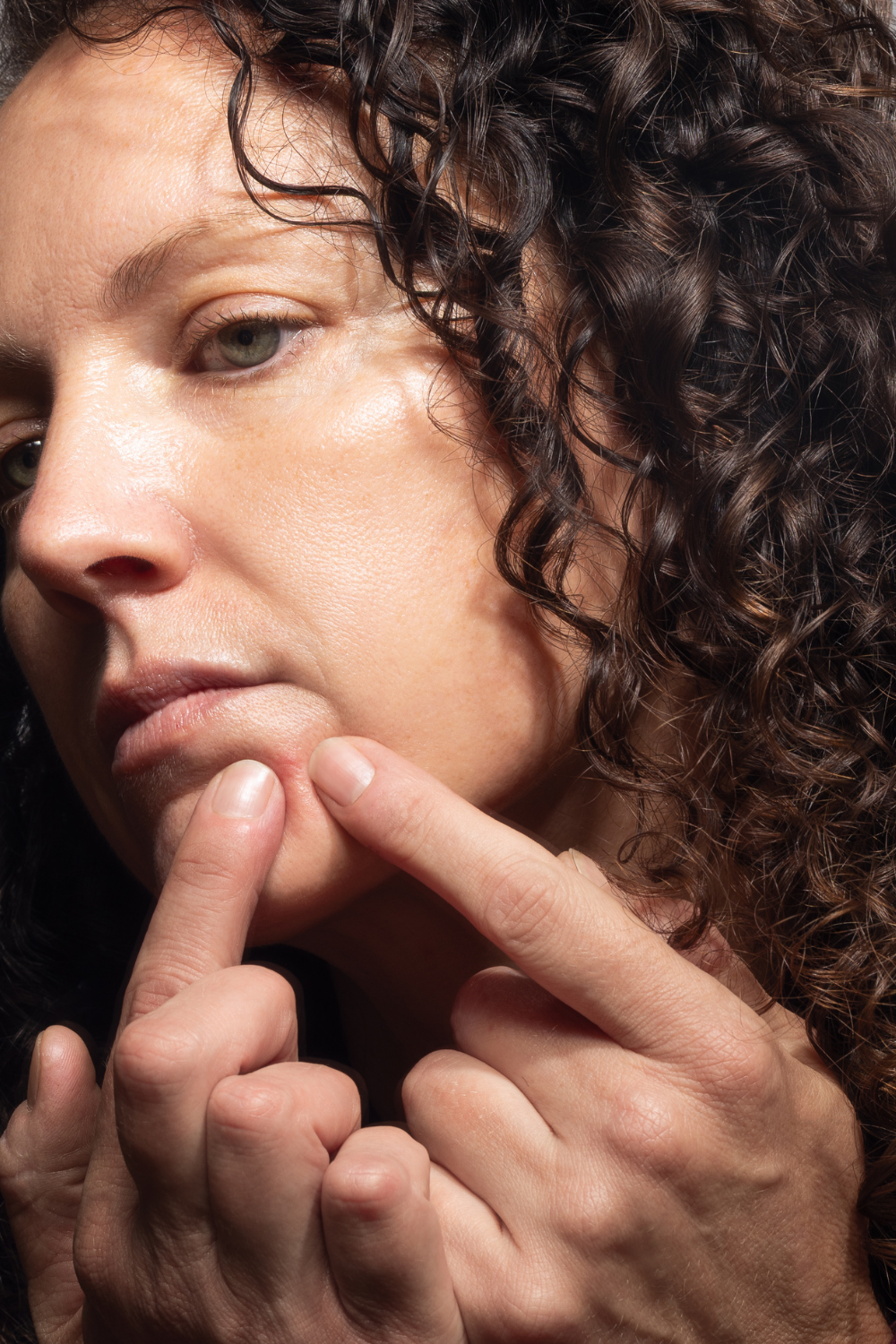
Hormonal Acne After 40: Why Perimenopause Brings Breakouts—and What Actually Works
You thought you left breakouts behind with your twenties. Then, somewhere in your mid-forties, they returned—uninvited, unexplained, and frustratingly resistant to everything that used to work. If this sounds familiar, you’re experiencing one of the lesser-discussed but remarkably common perimenopause skin problems: hormonal acne after 40.
The numbers are more significant than most women realize. Research published in the International Journal of Women’s Health reports that the prevalence of adult female acne ranges from 20% to 40% across studies, with approximately 26% of women aged 40 to 49 affected. A separate analysis in Dermatology Times puts that figure at 12% to 22% for women in middle-aged to older adult years—compared to just 3% of men in the same age group. This isn’t a fringe concern. It’s a widespread, hormonally driven skin change that deserves more attention than it currently receives.
And yet, when women in perimenopause develop acne, they’re often handed the same advice—and the same products—that worked for teenagers. That approach doesn’t just fall short. It can actively damage maturing skin that is simultaneously losing collagen, thinning, and struggling to retain moisture. Menopausal skin needs a fundamentally different strategy.
Why Acne Returns During Perimenopause: The Hormonal Mechanics
To understand why perimenopause skin breakouts happen, you need to understand the hormonal shift taking place beneath the surface.
During perimenopause, estrogen and progesterone begin their gradual, often erratic decline. But here’s the critical detail: testosterone doesn’t decline at the same rate. This creates a temporary but significant state of relative androgen excess—your body isn’t producing more testosterone, but with less estrogen to counterbalance it, androgens exert greater influence on your skin.
The consequences are direct and measurable. Androgens stimulate the sebaceous glands to produce more sebum—the oily substance that, in healthy amounts, protects your skin. In excess, sebum clogs pores, traps bacteria, and triggers the inflammatory cascade that produces breakouts. According to the International Journal of Women’s Health, this hormonal imbalance is the major driver of menopausal acne, with increased receptor sensitivity to dihydrotestosterone (DHT) and dehydroepiandrosterone sulfate (DHEAS) further amplifying the effect.
Compounding the problem: cortisol. Perimenopause is an inherently stressful transition—physically and emotionally—and elevated cortisol levels further stimulate androgen production. Research suggests that daily stress exacerbates acne in roughly one-third of adult female patients, creating a feedback loop where hormonal skin changes, sleep disruption, and emotional stress continually reinforce one another.
The Jawline and Chin Connection: What Your Breakout Pattern Reveals
If your breakouts are clustering along your jawline, chin, and around your mouth, that’s not coincidental—it’s a hormonal signature.
Adolescent acne tends to concentrate on the forehead, nose, and cheeks—the classic T-zone—where sebaceous glands are most dense. Hormonal acne in perimenopause and menopause follows a distinctly different pattern. Clinical literature consistently describes menopausal acne as presenting with inflammatory papulopustular lesions concentrated in the mandibular (jawline) and chin area, often extending perioral (around the mouth).
A study cited in the International Journal of Women’s Health describes a specific variant in perimenopausal women: deep-seated inflammatory papules or nodules with a predominant perioral distribution. These lesions are characteristically more painful, slower to resolve, and more likely to leave post-inflammatory erythema, hyperpigmentation, and scarring than their adolescent counterparts.
This distribution pattern is directly linked to the concentration of androgen receptors in the lower face. When those receptors are activated by the relative testosterone excess of perimenopause, the lower third of the face becomes the primary battlefield—which is precisely why your forehead may be clear while your jawline is not.
Perimenopause Acne vs. Teen Acne: Why It Demands a Different Approach
The impulse to reach for the same products and strategies that worked at seventeen is understandable—and almost always counterproductive. Perimenopause skin changes make your skin fundamentally different from what it was in adolescence, and treating menopausal acne requires acknowledging those differences.
What’s Different About Your Skin After 40
• Barrier function is compromised. Declining estrogen reduces the skin’s lipid barrier and transepidermal water loss increases. Products designed for oily teenage skin—harsh cleansers, alcohol-based toners, aggressive exfoliants—strip what little barrier protection remains and can worsen both dryness and breakouts simultaneously
• Collagen is declining. Your skin is losing structural density at the same time it’s developing acne. Aggressive acne treatments that work for resilient young skin can accelerate visible aging in mature skin, creating a frustrating paradox: clear skin that looks ten years older
• Inflammation behaves differently. Perimenopausal skin is more reactive and heals more slowly. Post-inflammatory hyperpigmentation from acne lesions tends to be darker, last longer, and scar more readily than in younger skin
• You may have dry skin and acne simultaneously. This is the hallmark paradox of menopausal acne and one of the clearest signals that your old approach won’t work. Many women navigating perimenopause experience dry menopause skin and active breakouts at the same time—something that rarely happens in adolescence. Your skin needs hydration and oil control in precise balance, not a one-dimensional assault on sebum
The takeaway: menopausal acne isn’t teen acne with wrinkles. It’s a distinct dermatological condition occurring in skin with fundamentally different needs, and it requires treatment strategies designed for perimenopause skincare—not repurposed from a high school medicine cabinet.
Treatment Approaches for Hormonal Acne in Mature Skin
Effective treatment for perimenopause-related acne addresses both the hormonal drivers beneath the surface and the visible breakouts on it—while respecting the reality that your skin’s tolerance, moisture levels, and healing capacity have changed.
1. Start with a Barrier-Respecting Skin Care Routine for Mature Skin
Before targeting acne specifically, ensure your daily routine isn’t contributing to the problem. Many women over 40 are unknowingly using products that strip the skin’s moisture barrier—which paradoxically triggers more oil production and worsens breakouts.
The foundation of any effective skincare for menopause-related acne is gentle, barrier-supportive care:
• Cleanse without stripping. A gentle, pH-balanced cleanser that dissolves impurities without compromising your moisture barrier is essential. The Reset by Modern Age Skin was formulated with precisely this balance in mind—effective enough to clear congested pores, gentle enough for perimenopause skin sensitivity
• Treat and repair overnight. Nighttime is when your skin does its deepest repair work. A serum rich in peptides, antioxidants, and bioactive botanicals can support cell turnover and calm inflammation without harsh actives. The Catalyst, our Nightly Renewal Complex, delivers targeted bioactives designed to work with your skin’s natural repair cycle
• Hydrate and seal. Acne-prone mature skin still needs deep hydration. Look for non-comedogenic formulations that reinforce the lipid barrier rather than clogging pores. The Innovator, our Luminous Repair Oil, provides barrier-reinforcing nourishment with lightweight oils that hydrate without contributing to congestion
• Protect daily. Sunscreen is non-negotiable. UV exposure worsens post-inflammatory hyperpigmentation from acne lesions and accelerates every other aspect of hormonal skin aging
2. Address the Hormonal Root Cause
Topical treatment alone often can’t resolve perimenopause acne because the drivers are systemic. Discuss hormonal approaches with your healthcare provider:
• Hormone Replacement Therapy (HRT) can help rebalance the estrogen-androgen ratio, and many women report significant skin improvement as a secondary benefit. Some women also incorporate topical estrogen skin care products for localized support
• Spironolactone, an androgen blocker, is commonly prescribed off-label for hormonal acne in adult women. It reduces sebum production at the hormonal level and is often effective when topical treatments alone fall short
• Oral contraceptives may be appropriate for women still in perimenopause, as they regulate hormonal fluctuations that trigger breakouts
Each of these approaches carries its own risk-benefit profile, and what’s appropriate varies by individual. A provider knowledgeable about menopause—ideally one certified through The Menopause Society—can help you navigate these options.
3. Support from Within: Nutrition, Supplements, and Stress Management
The connection between internal health and perimenopause skin problems extends to acne as well. Several evidence-based strategies can support clearer skin from the inside:
• Anti-inflammatory nutrition. Research links high-glycemic diets and dairy consumption to worsened acne. A nutrient-dense diet rich in omega-3 fatty acids, leafy greens, and low-glycemic whole foods supports both hormonal balance and skin health
• Targeted supplementation. Supplements for menopause dry skin that contain omega-3s, zinc, and vitamin E can also benefit acne-prone skin by reducing systemic inflammation and supporting barrier function from within
• Stress reduction. Given the established link between cortisol, androgen production, and acne, stress management isn’t a luxury—it’s a treatment strategy. Regular movement, adequate sleep, and practices like meditation or time outdoors can meaningfully reduce the hormonal triggers behind breakouts
4. Know When to See a Specialist
If your acne is deep, cystic, leaving scars, or resistant to the approaches above, a dermatologist with experience treating adult hormonal acne can offer additional interventions including prescription topicals, targeted procedures, and combination treatment plans designed for maturing skin. Don’t hesitate to advocate for yourself—perimenopause acne is a legitimate medical concern that warrants professional attention.
Aging Gracefully Through Every Skin Change
Hormonal acne after 40 can feel like a betrayal—a problem you thought you’d outgrown, arriving at precisely the moment your skin is already navigating collagen loss, dryness, and sensitivity. But like every other perimenopause skin change, it becomes more manageable when you understand the biology behind it.
The key is resisting the urge to treat it like a teenager. Your skin at this stage of life is performing a complex hormonal recalibration, and it needs care that reflects that complexity—gentle enough to protect a compromised barrier, targeted enough to address androgen-driven breakouts, and nourishing enough to support a skin that’s simultaneously fighting acne and aging.
That’s the philosophy behind everything we formulate at Modern Age Skin. We don’t believe in one-size-fits-all solutions, and we don’t believe in making women choose between clear skin and healthy skin. You deserve both.
Sources
Khunger N, Mehrotra K. “Menopausal Acne – Challenges and Solutions.” International Journal of Women’s Health. 2019;11:555-567. doi:10.2147/IJWH.S174292
Perkins AC, et al. “Acne Vulgaris in Women: Prevalence Across the Life Span.” Journal of Women’s Health. 2012;21(2):223-230. doi:10.1089/jwh.2010.2722
Kutlu O. “How to Best Support Women With Menopausal Acne.” Dermatology Times. February 2026.
Dreno B, et al. “Large-Scale International Study Enhances Understanding of an Emerging Acne Population: Adult Females.” Journal of the European Academy of Dermatology and Venereology. 2015;29(6):1096-1106.
Your skin is changing. Your care should change with it.

Written by Joy Kirst
Joy Brown Kirst is the founder and formulator of Modern Age Skin, an award-winning clean beauty brand specializing in perimenopause and menopausal skincare. With an MBA from Rice University and over 20 years of experience in corporate leadership and entrepreneurship, Joy brings strategic business expertise to the beauty industry.
Following her successful career in the executive search industry, Joy earned her Diploma in Organic Skincare Formulation from Formula Botanica (2021), combining her business acumen with botanical expertise to create bioadaptive, results-driven formulas for hormonal skin changes.
Modern Age Skin’s hero product, The Innovator - Luminous Repair Oil, has won both the Shape Skin Award for Best Facial Oil (2024) and the Healing Lifestyles Earth Day Beauty Award (2025). The brand is Power Beauty Collab certified and Leaping Bunny Certified, reflecting Joy’s commitment to clean, cruelty-free beauty.
Joy and Modern Age Skin have been featured in Forbes, BeautyMatter, Well Defined, on television with Pix 11 in NYC, and on the Well Done, Thrive After 45, and Midlife Mavericks podcasts. Through her work, Joy is redefining skincare for women navigating hormonal transitions, proving that aging skin deserves sophisticated, science-backed solutions.



Leave a comment
This site is protected by hCaptcha and the hCaptcha Privacy Policy and Terms of Service apply.