Rosehip Carrier Oil
INCI: Rosa Rubiginosa Seed Oil
Supplier: New Directions Aromatics ·
Evidence: ●●○ Supplier-substantiated
In our formulas: The Innovator — 10%
What it is
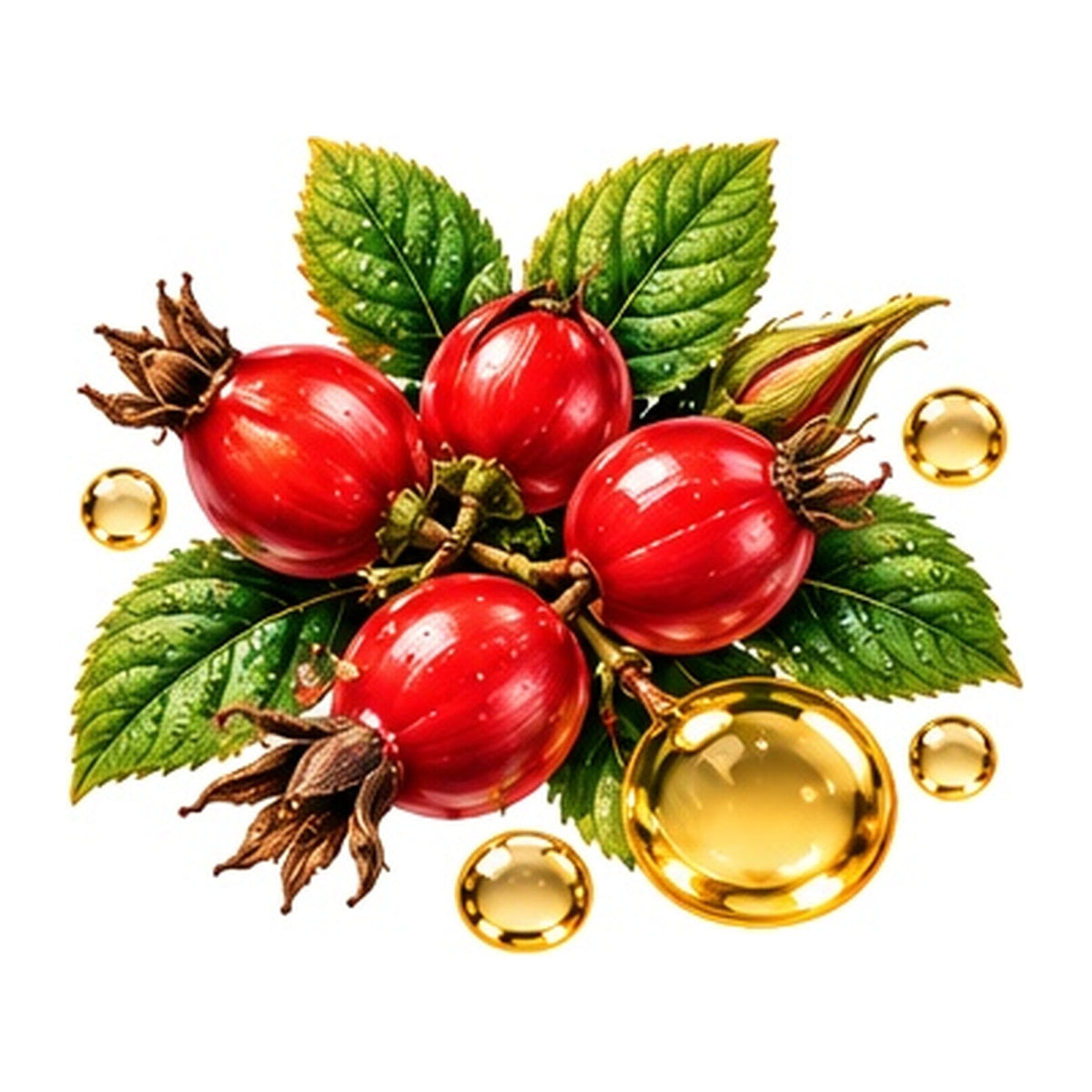
Cold-pressed from the seeds within rosehips — the fruit the rose leaves behind after the flower drops. Rosa rubiginosa, the sweet briar, is the species with the strongest cosmetic record, most of it from Chilean and Andean production. It is around 45% linoleic acid and 30% alpha-linolenic, making it one of the most polyunsaturated oils in common use, and it contains naturally occurring trans-retinoic acid precursors — vitamin A activity, without retinol on the label.
Why it matters for changing skin
Skin needs linoleic acid to build ceramide 1, one of the structural lipids that holds the barrier together. Skin cannot make linoleic acid; it has to come from outside. And its concentration in skin surface lipids falls with age. Rosehip is the most efficient way to deliver it in a botanical oil.
The vitamin A activity is genuine but gentle — orders of magnitude milder than a prescription retinoid, and appropriate for skin that would not tolerate one. It also pairs sensibly with the AHA in The Catalyst, which many women use on alternate nights.
Rosehip is fragile. Its polyunsaturated profile oxidises quickly on its own, which is why it sits at 10% inside a stabilised system with vitamin E and moringa rather than being sold as a single-oil product.
What it does
|
Concern |
How it helps |
|
Weakened barrier |
Highest linoleic acid content of our oils; feeds ceramide 1 synthesis |
|
Uneven tone and dark marks |
Natural vitamin A activity supports turnover |
|
Fine lines |
Gentle retinoid-family activity without retinol’s irritation |
|
Scarring and texture |
Long clinical and traditional record for skin repair |
|
Dryness |
Replenishes essential fatty acids skin cannot synthesise |
On the label you may also see it as
Rosa Rubiginosa Seed Oil · Rosehip Seed Oil · Rosa Canina Fruit Oil (a related species) · Rosa Mosqueta

Written by Joy Kirst
Joy Brown Kirst is the founder and formulator of Modern Age Skin, an award-winning clean beauty brand specializing in perimenopause and menopausal skincare. With an MBA from Rice University and over 20 years of experience in corporate leadership and entrepreneurship, Joy brings strategic business expertise to the beauty industry.
Following her successful career in the executive search industry, Joy earned her Diploma in Organic Skincare Formulation from Formula Botanica (2021), combining her business acumen with botanical expertise to create bioadaptive, results-driven formulas for hormonal skin changes.
Modern Age Skin’s hero product, The Innovator - Luminous Repair Oil, has won both the Shape Skin Award for Best Facial Oil (2024) and the Healing Lifestyles Earth Day Beauty Award (2025). The brand is Power Beauty Collab certified and Leaping Bunny Certified, reflecting Joy’s commitment to clean, cruelty-free beauty.
Joy and Modern Age Skin have been featured in Forbes, BeautyMatter, Well Defined, on television with Pix 11 in NYC, and on the Well Done, Thrive After 45, and Midlife Mavericks podcasts. Through her work, Joy is redefining skincare for women navigating hormonal transitions, proving that aging skin deserves sophisticated, science-backed solutions.