
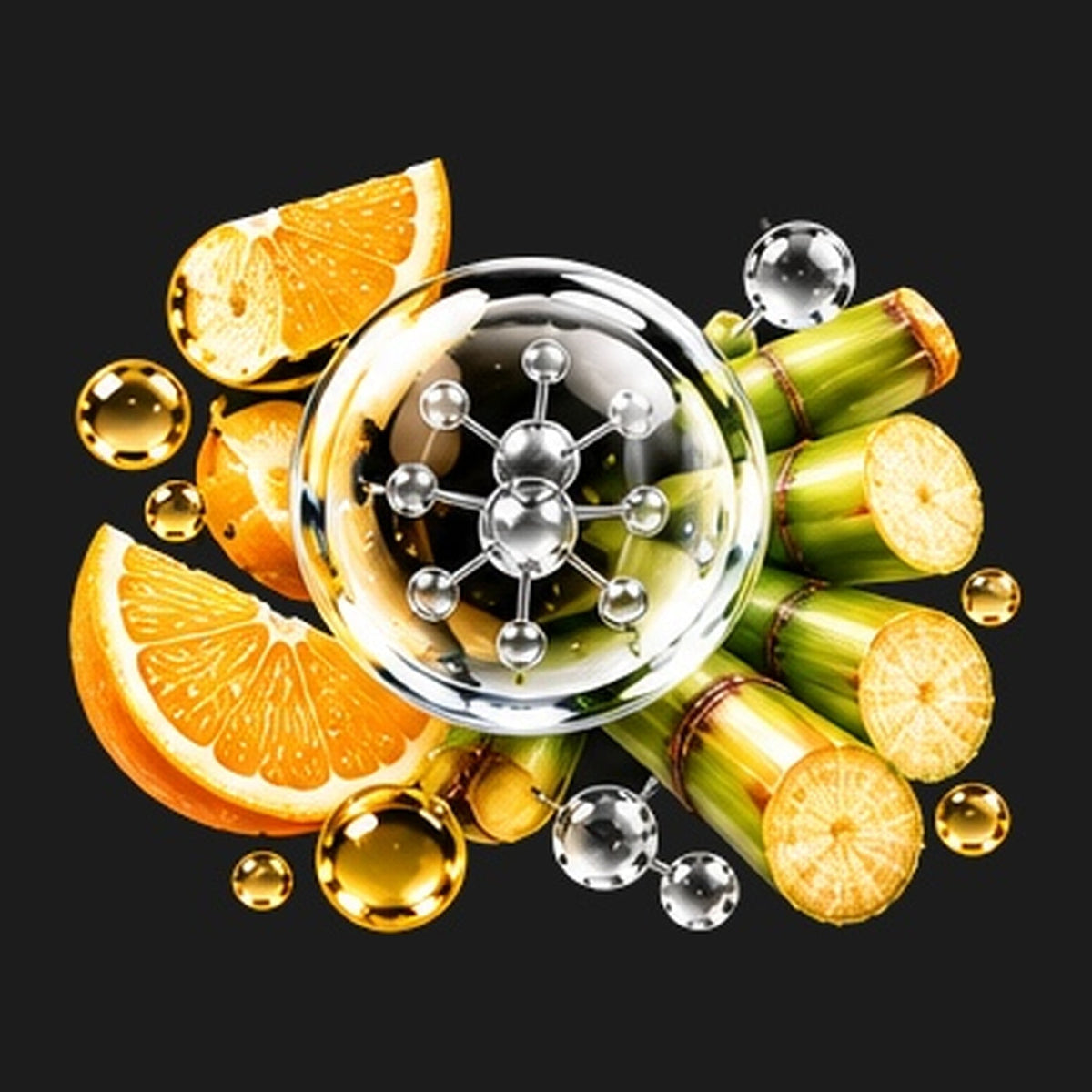
Resurfacid
INCI: Water (and) Glycolic Acid (and) Lactic Acid (and) Sodium Magnesium Silicate (and) Citric Acid (and) Xanthan Gum
Supplier: Barnet Products ·
Evidence: ●●○ Supplier-substantiated
In our formulas: The Catalyst — 2%
What it is
Not free acid dropped into a formula. Resurfacid is a lamellar water gel — a layered clay-and-gum architecture that holds a reservoir of alpha hydroxy acids and releases them into skin gradually rather than all at once. The acid load is glycolic (the smallest and most studied AHA), lactic (larger, gentler, and a humectant in its own right) and citric.
Why it matters for changing skin
This is the ingredient most likely to have burned you before. Cell turnover slows markedly after menopause — the reason skin looks dull and products stop absorbing — and exfoliation is the correct answer. But menopausal skin is also thinner, drier and more reactive, which is exactly the skin type that conventional acids punish. Many women in this category have concluded they simply “can’t use acids.” Usually what they cannot use is the delivery.
Controlled release is the fix. Barnet’s data reports exfoliation quality maintained without the inflammation or stinging associated with conventional AHA systems. In The Catalyst it sits at 2%, buffered with sodium hydroxide to a finished pH of 5.0–5.3, which is inside skin’s own comfortable range.
What it does
|
Concern |
How it helps |
|
Dullness from slowed cell turnover |
Gentle, sustained AHA exfoliation |
|
Rough or uneven texture |
Resurfaces the stratum corneum progressively |
|
Products no longer absorbing |
Clears the buildup that blocks them |
|
Past bad experience with acids |
Reservoir release designed to avoid stinging |
|
Uneven tone and dark marks |
Accelerated turnover fades surface discolouration |
Use note: AHAs increase sun sensitivity. Use The Catalyst at night and wear broad-spectrum SPF daily.
On the label you may also see it as
Glycolic Acid · Lactic Acid · AHA Complex · Alpha Hydroxy Acids

Written by Joy Kirst
Joy Brown Kirst is the founder and formulator of Modern Age Skin, an award-winning clean beauty brand specializing in perimenopause and menopausal skincare. With an MBA from Rice University and over 20 years of experience in corporate leadership and entrepreneurship, Joy brings strategic business expertise to the beauty industry.
Following her successful career in the executive search industry, Joy earned her Diploma in Organic Skincare Formulation from Formula Botanica (2021), combining her business acumen with botanical expertise to create bioadaptive, results-driven formulas for hormonal skin changes.
Modern Age Skin’s hero product, The Innovator - Luminous Repair Oil, has won both the Shape Skin Award for Best Facial Oil (2024) and the Healing Lifestyles Earth Day Beauty Award (2025). The brand is Power Beauty Collab certified and Leaping Bunny Certified, reflecting Joy’s commitment to clean, cruelty-free beauty.
Joy and Modern Age Skin have been featured in Forbes, BeautyMatter, Well Defined, on television with Pix 11 in NYC, and on the Well Done, Thrive After 45, and Midlife Mavericks podcasts. Through her work, Joy is redefining skincare for women navigating hormonal transitions, proving that aging skin deserves sophisticated, science-backed solutions.

%20Glycolic%20Acid%20(and)%20Lactic%20Acid%20(and)%20Sodium%20Magnesium%20Silicate%20(and)%20Citric%20Acid%20(and)%20Xanthan%20Gum%0ASupplier:%C2%A0%20Barnet%20Products%C2%A0%C2%A0%C2%A0%C2%A0%20%C2%B7%C2%A0%C2%A0%C2%A0%C2%A0%20%0AEvidence:%C2%A0%20%E2%97%8F%E2%97%8F%E2%97%8B%C2%A0%20Supplier-substantiated%0AI...)